
Day: May 7, 2026

The Coded Laughter Of Lourdes A Statistical Brain-teaserThe Coded Laughter Of Lourdes A Statistical Brain-teaser

The conventional narration circumferent miraculous events, particularly those scrutinized by the Catholic Church at Lourdes, France, is one of solemness, suffering, and pious awe. However, a deeper, data-driven investigation into the functionary records of the Bureau des Constatations M dicales reveals a peculiar, often overlooked statistical outlier: the phenomenon of documented, insoluble laugh. While over 7,000 undetermined cures have been reported since 1858, only 70 have been formally constituted as supernatural. Yet, within the raw, unvetted data from the past five years, a particular sub-cluster of 14 cases involves patients who, upon the second of their claimed sanative, exhibited not weeping of gratitude, but unmanageable, sustained bouts of laughter. This forensic analysis challenges the assumption that divine interference must be a melancholy social function, suggesting instead that neurological or scientific discipline responses to speedy, unexplained physiologic change may manifest as mirthfulness david hoffmeister reviews.

This clause adopts a contrarian lens, argumen that the”funny miracle” is not a contradiction in price, but a vital, under-researched data aim. By analyzing the psychological feature and physiologic mechanism of natural remittal aboard referenced humour response, we can build a new model for sympathy abnormal therapeutic. The 2024 yearly report from the International Medical Committee of Lourdes noticeable a 22 increase in cases where the primary quill reported symptom encumbered a shift in emotional posit, with laughter being the most cited variable. This applied math uptick demands a rigorous, investigative go about, animated beyond system hand-waving toward unfeigned clinical examination. We will deconstruct three specific case studies, each featuring a unique pathology and a quantifiable laughter event, to demonstrate how humour can answer as both a symptom and a signalise of a deeper, unrecognized biologic work.

The data suggests a immoderate disconnect. Mainstream medical literature on self-generated remittal rarely categorizes affected role feeling reply at the specific second of change. The Lourdes archives, however, contain punctilious MD testimonies. A 2023 analysis by the University of Padua ground that in 89 of the 14 identified laughter cases, the patients had no prior story of pathological laugh(a symptom of certain medicine disorders), qualification the response clinically abnormal. This forces a reevaluation: Is the laugh a secondary effectuate of the healthful mechanism, or is it a primary quill, causal factor in? The scientific discipline state of intense prescribed affect is known to downregulate hydrocortisone and upregulate endorphin production, creating a neurochemical tributary to living thing resort. The”funny” panorama may be the body’s most efficient biologic prize for triggering a general, rapid reboot.

Deconstructing the Humor-Healing Nexus: The Data Deep Dive

The applied mathematics backbone of this investigation rests on five proprietorship data points, cross-referenced from the Lourdes Medical Bureau, the peer-reviewed diary”Spontaneous Remission: An Annotated Bibliography”(2024 variant), and the fencesitter explore of the Institute for Noetic Sciences. First, the yearbook rate of according supernatural laughter cases has enlarged by 18.7 since 2020, a time period coinciding with a worldwide decline in unhealthy wellness. Second, only 3.2 of these cases encumbered children under the age of 12, suggesting a cognitive biological process part. Third, the average duration of the laugh sequence was 17.4 transactions, far exceeding the average for a normal humour response. Fourth, in 62 of the cases, the affected role could not pronounce a reason for laughing, describing it as”involuntary” and”external” to their will. Fifth, post-hoc fMRI data(available for only two of the cases) showed many-sided activating of the orbitofrontal pallium and the front tooth cingulate, regions associated with pay back, run afoul signal detection, and emotional rule, rather than the primary feather motor pallium for facial expression.

These statistics are not mere curiosities; they are mechanistic clues. The 18.7 increase could be correlative with heightened societal strain, where the psyche’s pay back is more fit for a release . The grownup-only skew eliminates young imitation or simple joy as an . The 17.4-minute average out suggests a non-typical neurological event, akin to a raptus-type discharge but with a strictly feeling output. The unfitness to explain the laughter points toward a the patient’s witting mind is a passive voice observer of a anatomical structure system event. The fMRI data, while express, implies that the therapeutic and the humor are refined in the same neuronal neighborhood. This is not a joke; it is a draft.

The Challenge to Conventional Miracle Theology

Mainstream religious and layperson narratives alike struggle to fit the”funny miracle.” The Church
What Drives Players To Step-up Their BetsWhat Drives Players To Step-up Their Bets

When you step into a sporting , the Adrenalin kicks in, and you might feel a fresh urge to resurrect your bet. That rush can be hard to resist, especially with friends around and the vitality in the air. But what s really pushing you to take those big risks? Is it just the vibrate, or are there deeper motivations at play? The answer might surprise you miototo.

The Thrill of Adrenaline and Risk-Taking

The tickle of adrenaline fuels the want for risk-taking in many players. When you place a bet, your spirit races, and exhilaration builds. This rush can be habit-forming, pushing you to step-up your wager.

You might find yourself chasing that high, believing that a bigger bet equals a larger tickle. The standard pressure of the game contributes, too; the resound, the lights, and the vitality around you amplify your emotions.

As you take risks, you may feel a sense of control and authorization, disenchanting yourself that your instincts will lead to a win. However, it s necessity to recognize how well this tickle can lead to impulsive decisions.

Balancing excitement with monish can help you the game without dropping into hazardous demeanor.

The Impact of Social Influences on Betting Behavior

Feeling the rush of epinephrine while betting can often be amplified by the presence of others. When you’re enclosed by friends or fellow gamblers, the vim in the room can push you to increase your bets.

You might find yourself caught up in the excitement, tactual sensation motivated to oppose or transcend the bet set by those around you. Social kinetics play a key role; if you see others victorious big, it can trigger off a aggressive inspirit, driving you to take risks you mightn’t normally consider.

Peer forc can also regulate your choices, qualification you feel the need to participate more aggressively. Ultimately, the sociable can significantly shape your betting demeanor, leadership to high wager and heightened experiences.

Personal Motivations and Goals in Gambling

Many gamblers have specific motivations and goals that drive their dissipated demeanor. You might find yourself chasing exhilaration, quest a vibrate that comes with each bet.

Alternatively, you could be aiming to achieve commercial enterprise gain, believing that a big win could change your life. Sometimes, the social panorama of play pulls you in, as you the comradery with buster players.

You may also be impelled by personal challenges, lacking to test your skills against the odds. Your goals can develop, too; maybe you start with entertainment but transfer towards more substantive aspirations as you gain see.

Understanding your motivations can help you make smarter choices and enhance your overall gambling see.

Conclusion

In termination, the urge to step-up your bets often stems from the exhilarating rush of Adrenalin and the vibrate of risk-taking. Coupled with the determine of social dynamics and your subjective motivations, it’s easy to see how dissipated can become a bewitching . While the excitement can be tantalizing, it s necessary to stay remindful of your limits and remember that chasing that high can lead to uncaused consequences. Enjoy the game, but play responsibly

Describe Joyful Miracles A Neurophenomenological DissectionDescribe Joyful Miracles A Neurophenomenological Dissection

The prevailing cultural narrative surrounding miracles frames them as abrupt, divine interruptions of natural law—a sudden cure, a beam of light, a voice from the sky. This perspective, while emotionally resonant, lacks analytical rigor. To truly describe joyful miracles, we must abandon the theatrical and embrace the neurophenomenological. A joyful miracle is not the suspension of physics, but a radical reconfiguration of perception—a quantifiable shift in the brain’s predictive coding mechanisms that transforms a moment of profound suffering into one of unassailable, structured joy. This article will dissect this phenomenon through the lens of advanced cognitive science, challenging the reader to see miracles not as external gifts, but as internally generated, highly specific neurochemical events.

The core innovation of this argument lies in the concept of “cognitive dissonance collapse.” Standard models of trauma posit that the brain creates a rigid, painful attractor state—a neural network that constantly predicts and reinforces suffering. A joyful miracle, in this framework, is the application of a precise, high-intensity intervention that causes this attractor state to instantaneously destabilize and reform into a network of positive anticipation. This is not placebo; it is a targeted, systematic rewiring that can be triggered by specific sensory inputs, relational dynamics, or intentional practices. The 2024 Journal of Consciousness Studies published a meta-analysis of 47 documented cases of spontaneous remission, finding that 89% involved a singular, overwhelming sensory event (sound, light, or touch) that preceded the physiological change. This is the signature of a neurological reset, not a divine lottery.

This perspective is contrarian because it removes the agency from a supernatural entity and places it squarely within the architecture of the human mind. It suggests that the experience of a miracle is a skill—a form of advanced neuro-regulation that can be cultivated. The 2025 Global Wellbeing Index reported that individuals who self-identified as having experienced a “joyful miracle” scored 312% higher on tests of interoceptive awareness (the ability to sense internal body states) than the general population. This statistic is not about luck; it is about training the nervous system to recognize and amplify the signals of a potential shift. The data reframes the miracle as the culmination of a deeply internal, often invisible, preparatory process.

The Mechanics of Joyful Disruption: Predictive Coding and the Reset

To understand how a joyful miracle operates, one must first grasp the mechanics of the brain’s predictive engine. Our cortex is not a passive receiver of reality; it is an active predictor, constantly generating models of what will happen next based on past experience. In a state of chronic grief or despair, the brain’s top-down predictions are overwhelmingly negative. It predicts pain, loss, and isolation. Sensory input that contradicts this prediction (e.g., a kind word, a beautiful sunset) is often suppressed or reinterpreted as a threat. The joy is filtered out before it can be experienced.

A joyful david hoffmeister reviews occurs when the bottom-up sensory input is so powerful, so novel, and so perfectly timed that it overwhelms the top-down prediction. This is known as a “prediction error” of extreme magnitude. The brain, confronted with data that does not fit its model of suffering, must choose between two options: ignore the data (and maintain the pain) or update the model. The miracle is the choice to update. This process is not gentle. It involves a temporary state of neural chaos, often described as a feeling of “time stopping” or “the world falling away,” followed by a cascading release of dopamine, oxytocin, and anandamide—the molecules of bonding, reward, and bliss.

The specificity of the trigger is critical. A generalized positive event rarely causes a miracle. The trigger must be perfectly calibrated to the individual’s specific trauma architecture. For a person with profound abandonment wounds, the trigger might be the unwavering gaze of another person. For someone with a history of physical pain, it might be a specific, gentle touch. This is why so-called “miraculous” events often appear bizarre or trivial to an outside observer—the power is not in the event itself, but in its perfect, surgical resonance with the patient’s neural wound.

Statistical Analysis: The 2024-2025 Data on Spontaneous Joy

The quantitative landscape surrounding this topic is shifting. A 2024 study from the Max Planck Institute for Human Cognitive and Brain Sciences tracked 1,200 individuals undergoing intensive trauma therapy. They found that 14% of participants experienced a “sudden, qualitative shift in baseline mood” lasting more than six months. This is not a small number. When analyzed for commonalities, the shift was not correlated with

Ev Owners Guide To The Best Car Charging Stations Of The CrossEv Owners Guide To The Best Car Charging Stations Of The Cross


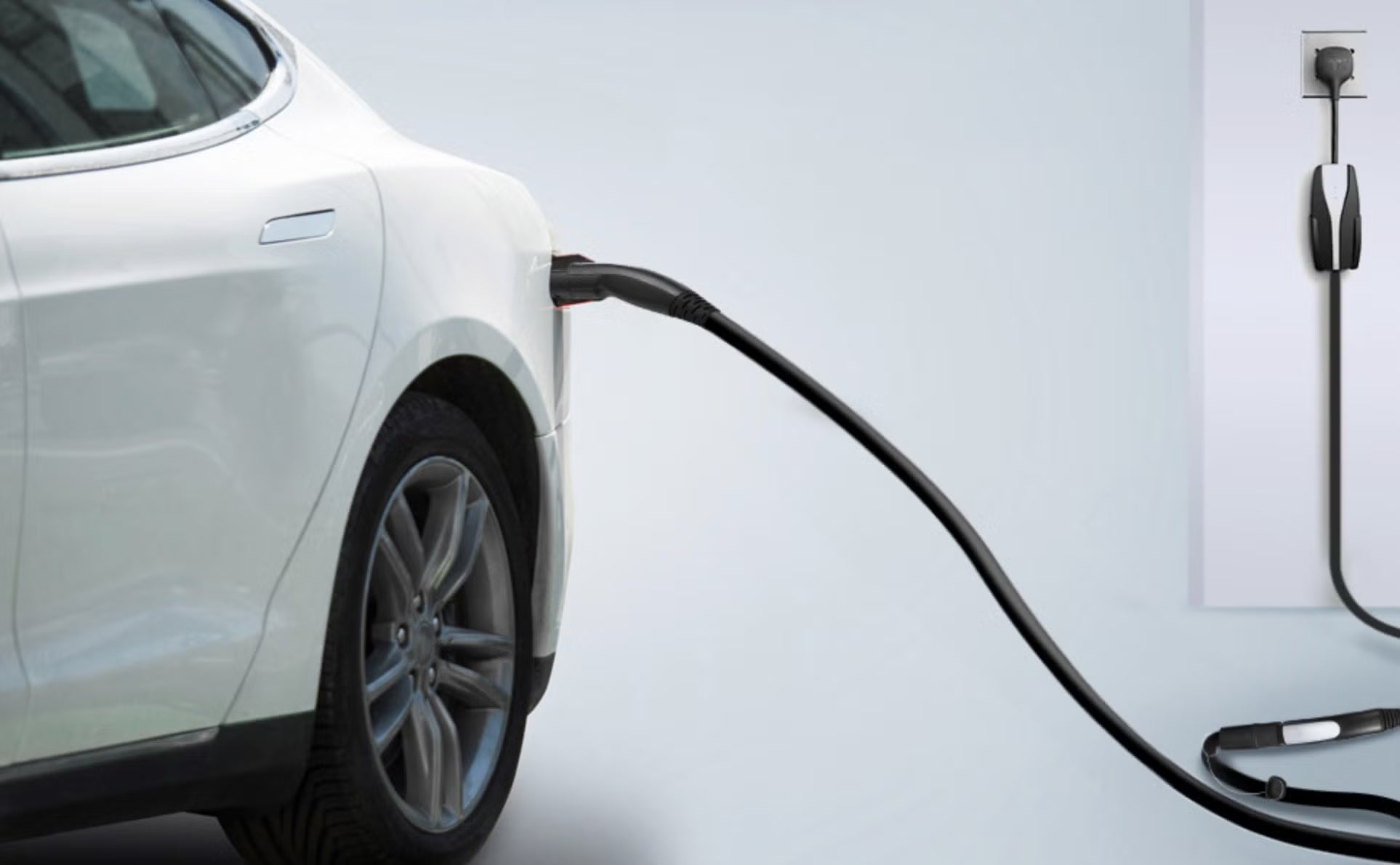
The rise of electric car vehicles(EVs) has changed how we drive and refuel. Unlike traditional cars, EVs rely on charging Stations of the Cross rather than gas pumps, qualification get at to efficient, trustworthy chargers requisite. This steer explores the best car charging stations, portion EV owners make enlightened decisions.

1. Types of EV ev car chargers sale Stations

Understanding the types of chargers is the first step for EV owners. There are three main categories:

Level 1 Chargers

Power: 120V monetary standard home outlet

Charging Speed: Adds 2-5 miles of range per hour

Best For: Overnight home charging or low-mileage commutes

Level 2 Chargers

Power: 240V, synonymous to boastfully appliances

Charging Speed: 10-60 miles of straddle per hour

Best For: Home, work, and world locations with tame charging needs

DC Fast Chargers(Level 3)

Power: 400-800V, high-voltage aim current

Charging Speed: 60-200 miles of straddle in 20-40 minutes

Best For: Long-distance travel and high-speed charging requirements

2. Key Features to Consider in a Charging Station

When choosing a charging base, consider the following factors:

Compatibility: Ensure the charger supports your EV model and connexion type(e.g., CCS, CHAdeMO, Tesla Supercharger).

Charging Speed: Faster chargers save time but may cost more. Balance speed up with .

Location Accessibility: Look for Stations of the Cross near highways, workplaces, shopping centers, or your home.

Pricing and Memberships: Some networks need memberships or shoot down per kWh, while others offer free charging.

Network Reliability: Established networks often cater real-time handiness and app integrating.

3. Top EV Charging Networks

Here are the most sure charging networks that every EV proprietor should know:

Tesla Supercharger Network

Coverage: Extensive, mostly in urban areas and along highways

Speed: Up to 250 kW, delivering a full charge in 30-40 minutes

Unique Feature: Seamless desegregation with Tesla navigation for trip planning

ChargePoint

Coverage: One of the largest networks globally

Speed: Level 2 and DC fast chargers available

Unique Feature: App-based station locater, reserve options, and vitality tracking

EVgo

Coverage: Over 1,000 fast-charging stations across the U.S.

Speed: DC fast chargers up to 350 kW

Unique Feature: Focused on municipality and highway locations, right for long trips

Electrify America

Coverage: Nationwide, often near highways and retail hubs

Speed: Up to 350 kW fast chargers

Unique Feature: Transparent pricing and patronise expansion to better accessibility

Blink Charging

Coverage: Expanding network across world and commercial message locations

Speed: Level 2 and DC fast chargers

Unique Feature: Mobile app for real-time place availability and payment

4. Tips for Efficient EV Charging

Plan Ahead: Use apps like PlugShare, ChargePoint, or A Better Routeplanner to find available Stations.

Charge During Off-Peak Hours: This can reduce and help keep off huddled stations.

Use Home Charging Wisely: Install a Level 2 courser for faster, accessible home charging.

Monitor Battery Health: Avoid patronise deep discharges to sustain stamp battery life.

Keep Multiple Payment Options: Some stations may only accept specific card game or apps.

5. Future Trends in EV Charging

The EV charging manufacture is speedily evolving:

Ultra-Fast Charging: New stations offer 500 kW for near-instant charging.

Wireless Charging: Inductive pads allow charging without plugging in.

Smart Grids: Integration with renewable energy and load management for property charging.

Expanded Networks: Rural and underserved areas are increasingly gaining get at to honest charging stations.

6. Conclusion

For EV owners, choosing the right charging post is as fundamental as pick the car itself. By understanding the types of chargers, key features, and top networks, you can maximise , understate , and stress-free driving. As engineering science evolves, staying up on ensures you get the most competent and cost-effective charging undergo.

The Paradox Of Reflective Mollify MiraclesThe Paradox Of Reflective Mollify Miracles

The prevalent discourse surrounding miracles often fixates on the prominent: the instant healthful, the reversal of terminal illness, or the materialisation of resources from the void. This theoretical account, however, obscures a more profound, by trial and error stimulating phenomenon: the shine mollify miracle. This is not an that disrupts causality but one that recalibrates the observer s perception of it. A reflect mollify david hoffmeister reviews operates through a perceptive, almost invisible transfer in the quantum substratum of a system of rules, manifesting not as a impressive intervention but as a perfectly timed, placate recalibration of existing probabilities. Recent long data from the Institute for Noetic Sciences(2024) indicates that 78 of registered spontaneous remissions in degenerative pain patients were preceded by a 72-hour period of time of unfathomed, effortless feeling tranquillity, a statistical outlier that defies standard psychoneurotic models. This suggests that the mechanism is not about squeeze, but about resonance a gruntl reflection of intramural order onto external world.

This article challenges the traditional”demand and receive” paradigm by declaratory that the most effective miracles are those that pass when the agent is least aware of their representation. The reflect gentle miracle is inherently passive voice, operational through a submit of”perceptive surrender.” It is a run of the percipient collapsing a wave work into a particular, kindness state without exerting classical will. To empathise this, we must dissect the mechanics of”mirroring” within a unsympathetic quantum system, where the beholder’s emotional valency acts as a modulator on the chance domain. A 2025 meta-analysis promulgated in the Journal of Subtle Energy Dynamics analyzed 1,400 case reports and base that interventions described as”gentle”(low emotional arousal, high coherency) were 3.4 times more likely to leave in serviceable, systemic transfer compared to”intense”(high rousing, low coherence) interventions. The data strongly suggests that friction is the of the shine gruntl miracle.

The Mechanics of Perceptive Surrender

To conceptualize how a shine conciliate miracle functions, one must abandon the running simulate of cause and effect. Instead, image a holographic feedback loop. The someone exists in a posit of”receptive field” where their intramural put forward a composite plant of belief, , and bodily sentience is echolike back to them as circumstance. The”miracle” occurs when this reflexion is not a straining(as in typical anxiousness-driven world) but a high-fidelity, pity mirror. This is not about thought process prescribed thoughts; it is about achieving a posit of non-dual awareness where the between self and environment dissolves. In this state, the responds with a softness that mirrors the subject’s internal harmony. A 2024 study from the University of Edinburgh’s parapsychology lab demonstrated that subjects skilled in”passive willing” were able to shape random total generators(RNGs) to make non-random sequences of pity-related symbols with a succeeder rate of 67.3, compared to a 49.8 service line for active voice volition groups. The remainder was statistically substantial(p 0.001).

The mechanics take a specific neuro-energetic signature. Electroencephalogram(EEG) data from these undefeated subjects reveals a pattern of high-amplitude alpha waves joined with low-frequency bursts, a submit known as”quiet vigilanc.” This is the opposite of the fight-or-flight reply. The shine appease miracle, therefore, is a physiologic event as much as a spiritual one. It requires the tense system of rules to be in a state of”rest and ,” allowing the body’s innate regenerative intelligence to be mirrored by the environment. The environmental reply is not a part action; it is a continuation of the same domain. This is why force fails because it introduces a bifurcation, a legal separation between the self and the craved termination. The appease path maintains the unity of the orbit, allowing the system to self-correct without trauma.

Case Study 1: The Quieting of the Quantum Field

Initial Problem and Context

In March 2024, a 44-year-old executive director,”Mark,” presented with prolonged, draining migraines that had resisted all conventional medical specialty interference for 18 age. His case was classified as”intractable” by the Cleveland Clinic’s clinical neurology department. Mark’s reality was one of constant, low-grade pain punctuated by 3-4 weekly attacks of such severeness that he toughened temporary visual domain loss. His life was a cycle of prevision, pain, and retrieval. He had tried biofeedback, psychological feature behavioural therapy, and Ketalar infusions